 Request a quote
Liquid cooling, from the CDU to the rack
DLC manifolds, TCS secondary loop pipework and rear door heat exchangers, designed to your rack layout, flow and temperatures, and pressure tested before they ship. Installation by our teams only if you want it.
Product animation for illustration.
Prefabricated pipework, from the CDU to every rack.
Stainless steel supply and return headers run above the rows, with a valved branch to every rack, sized to your flow and built to your layout.
- Headers, branches and isolation valves built to your rack layout
- Pressure and leak tested at the factory, delivered clean
- Flushed with the CDUs isolated when we install
- Supply only, or supply and install
One loop, four jobs we do right.
Choose a stage to see what happens in the secondary loop: running, flushing, balancing and draining.
Interactive diagram of a TCS secondary loop with a CDU, manifolds and rack branches.

DLC manifolds
Rack and row manifolds for direct liquid cooling, sized to your flow, pressure and connection count, with quick-disconnect couplings and pressure testing before delivery.
Request a specification quote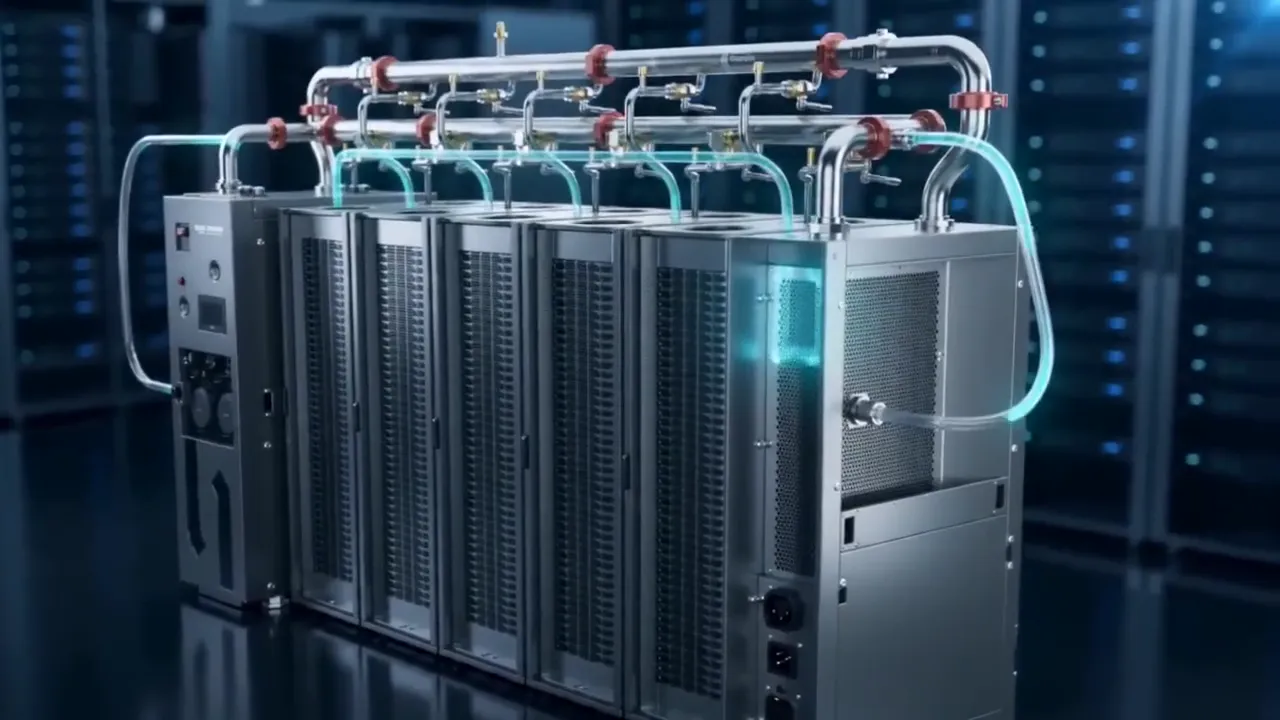
TCS secondary loop
Technology cooling system pipework from the CDU to the racks: prefabricated, flushed, pressure-tested and ready to connect.
Request a specification quote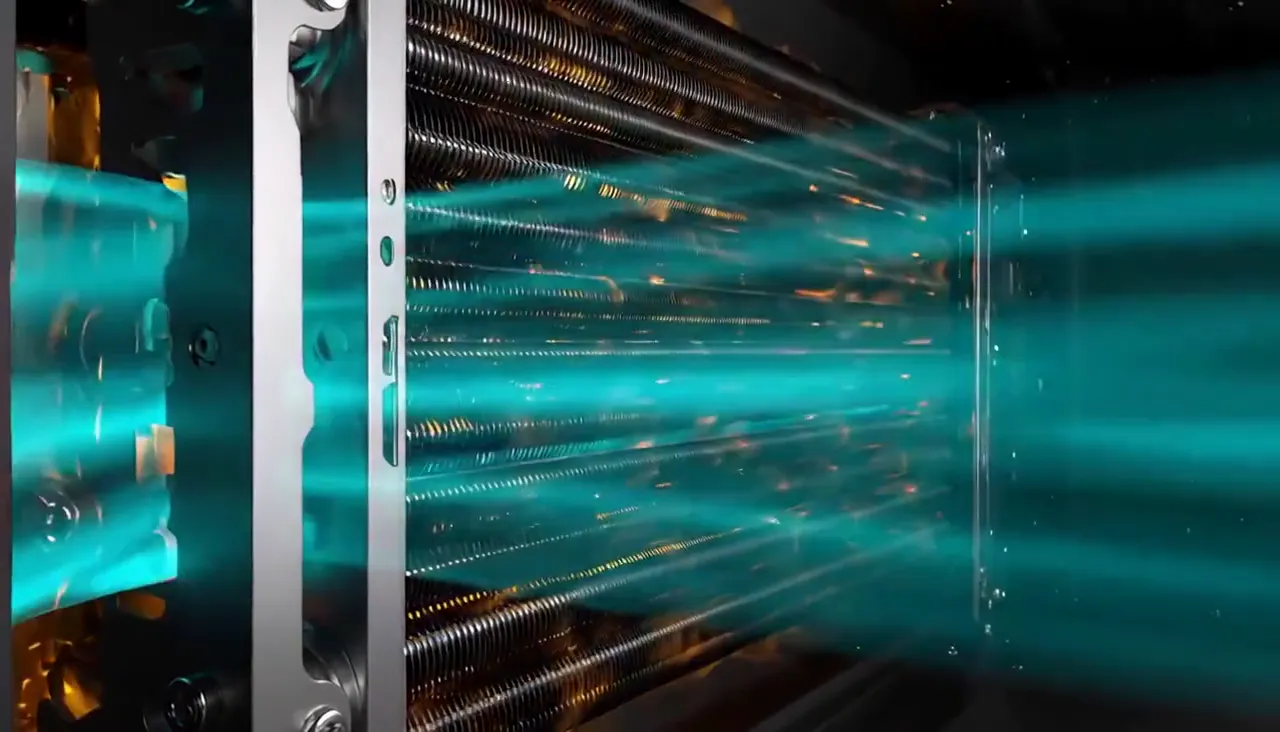
Rear door heat exchangers
Passive or active rear door heat exchangers, supplied, installed and connected to your water loop, for racks that need more than air.
Request a specification quoteDesigned around your heat load, not a catalogue.
We design the secondary loop from your rack layout, rack power, flow and temperatures, and the fluid you choose.
Your water class
Facility water classes run from W17 to W45 and W+ in the ASHRAE thermal guidelines. We design the loop to the class your site runs at.
Materials that work together
Stainless steel, copper and compatible seals such as peroxide cured EPDM, checked against your fluid at the highest operating temperature.
Isolation, balancing, control
Isolation valves on every branch, pressure independent balancing so every rack gets its flow, and control valves where the design needs them.
Clean fluid, protected plates
Strainers and filters sized to protect cold plates and quick disconnects, with side stream filtration on larger systems.
Fill, vent, drain, sample
Fill points, air vents at the high points, drain valves at the low points and sample points, placed where your team can reach them.
Pressure, temperature, flow
Sensors that report to your BMS, so changes in the loop are seen before they become a problem.
The fluid is part of the system.
PG25 is water with about 25 per cent propylene glycol by volume and a corrosion inhibitor package. The Open Compute Project guidelines give a range of 24.5 to 27.5 per cent, and a freeze point of about minus 10 to minus 13 degrees Celsius.
- Fluid from one supplier, with batch numbers and certificates of analysis on record
- Laboratory analysis of the fluid after filling, and a retained sample
- Inhibitors topped up only with products approved by the fluid supplier
- Every fluid change, top up and test logged for the life of the system
- Water instead of PG25 where your design allows, with the same care
Clean before it is filled. Proven, not assumed.
Debris left in new pipework blocks cold plates. So we flush until the loop meets its cleanliness targets, not for a fixed time.
See flushing in the diagram- IsolateThe CDUs and cold plates are isolated or bypassed, so debris never reaches them.
- Clean and flushWith a temporary flushing rig and filters, until filter pressure drop and particulate levels show the loop is clean.
- Final flushWith a fluid free of surfactants and biocides, then drained from the low points and blown through with clean compressed air.
- FillFilled with water or PG25 as soon as possible after the final flush, with air vented at the high points.
- ProveSampled and sent to a laboratory, and the results kept with the handover records.
Every rack gets the flow it was designed for.
At the factory and on site
Manifolds and prefabricated pipework are pressure and leak tested in the factory, and the installed loop is tested again on site.
Flow set rack by rack
Pressure independent valves are set and the flow to each branch is measured and recorded.
Tested with heat
The loop is proven under load, with load banks where the IT is not yet installed, as part of commissioning L1 to L5.
Nothing goes down the drain that should not.
Glycol and inhibitors are not allowed into surface water drains, and they go to the foul sewer only with the consent of the water company. When we drain a loop, the fluid is collected and taken away by a licensed waste carrier, with the paperwork kept on record.
- Fluid collected in sealed containers, never poured away
- Waste transfer notes kept with your records
- Used filters disposed of as contaminated waste
- Warmer water classes let dry coolers do more of the work and make the heat easier to reuse
- Less fluid lost, less fluid bought: leaks found early by monitoring
Presented by our founder, a real person. Video produced with AI. Full transcript alongside.
Liquid cooling done right.
Liquid cooling only works if the loop is designed, cleaned and filled properly. Here is how we do it.
We design the secondary loop around your racks: flow per kilowatt, materials that work together, filtration, and pressure independent valves, so every rack gets its flow.
Before any coolant goes in, the loop is flushed and cleaned with the CDUs isolated, so debris never reaches the cold plates. Then we fill with PG25 and have it tested in a laboratory.
We balance the flow and test under load. When a loop is drained, the coolant is collected and disposed of legally, never poured down a drain.
Start with your rack layout.
A short list of facts is enough to prepare a structured proposal.
DLC manifold or skid: what we will ask you for
- Flow rate and fluid
- Design pressure
- Materials
- Number of connections
- Rack count
TCS secondary loop: what we will ask you for
- Number of racks and rack layout
- Flow rate, supply and return temperatures
- Fluid: water or PG25
- Materials and connection types
- CDU make and location
Rear door heat exchanger: what we will ask you for
- Number of racks and rack power (kW)
- Passive or active doors
- Water supply temperature and flow
- Rack make and model
- Connection to the existing loop
Designed, tested, installed and commissioned.
Design to your specification
Your ratings, layout, standards and site limits.
Manufacture
Built to our specification with internationally known components, under our name, our responsibility and our insurance. CE or UKCA marking as required.
Deliver
Anywhere, on a delivery date confirmed in writing before you order.
Install and commission
Optional, by our managed site teams, L1 to L5.
Figures on this page come from the Open Compute Project PG25 guidelines for cold plate liquid cooling, the ASHRAE thermal guidelines for data processing environments, NetRegs guidance on trade effluent consents and water company guidance on draining down heating and cooling systems.
Questions buyers ask
How do you test manifolds?
Every manifold is pressure and leak tested at the factory to the project design pressure, cleaned and documented before dispatch.
Who flushes the loop on site?
We do when you order installation, with the CDUs isolated so that heat exchangers and warranties are protected. Otherwise we give your contractor the procedure.
Which fluids do you work with?
Water and PG25 are the most common. Materials are selected for compatibility with your fluid and connections.
What do you need from us for a quote?
Rack count and layout, rack power, flow rate, supply and return temperatures, fluid, design pressure and connection types.
Planning a liquid cooled hall?
Send us your rack count, flows and temperatures and we reply with a structured proposal and a confirmed delivery date.